

Introduction
Few emotions are as powerful—or as frightening—as the desire to see someone who has deeply wounded you suffer. Whether you’ve been betrayed by a trusted friend, abused by someone in authority, falsely accused, abandoned by a loved one, cheated in business, or repeatedly mistreated, the pain can become so overwhelming that thoughts of revenge begin to take root. Some people silently wonder, “Does God understand how angry I feel?” Others ask, “Are there Bible verses about wanting to kill your enemies?”
If you’ve searched for this topic, you may be carrying wounds that haven’t healed. Perhaps someone has destroyed your reputation, hurt your family, taken advantage of your kindness, or caused lasting emotional or physical harm. The desire for justice can become so intense that it feels impossible to let go of hatred.
The Bible does not ignore these painful emotions. In fact, Scripture records the honest cries of people who were overwhelmed by grief, anger, betrayal, and injustice. David, Jeremiah, Job, and other faithful servants of God poured out their deepest emotions before Him without pretending everything was fine. God welcomes honest prayers, even when our hearts are full of hurt.
At the same time, the Bible consistently teaches that God’s people must never take personal vengeance or seek to murder their enemies. Instead, Scripture points us toward a higher path—bringing our anger to God, trusting His perfect justice, praying for those who persecute us, and allowing His grace to transform even the darkest emotions.
If you’re struggling with hatred, revenge, or overwhelming anger, know this: God is not shocked by your feelings. He invites you to bring them to Him so He can replace bitterness with peace, despair with hope, and revenge with His perfect justice.
This guide explores what the Bible truly says about wanting to kill your enemies, explains difficult passages in their proper context, and offers practical biblical wisdom for finding freedom from hatred while trusting God to make all things right.
Quick Answer
Does the Bible support wanting to kill your enemies?
No. While the Bible honestly records the emotional cries of people who longed for God to judge their enemies, it never encourages believers to murder or take personal revenge.
Instead, Scripture teaches believers to:
- Bring anger and pain honestly to God in prayer.
- Leave justice and vengeance in God’s hands.
- Refuse personal retaliation.
- Love and pray for enemies.
- Seek peace whenever possible.
- Trust that God is both perfectly just and perfectly merciful.
The Bible recognizes that deep hurt can produce intense anger, but it consistently calls Christians to overcome evil with good rather than responding with violence or hatred.
What Does the Bible Say About Wanting to Kill Your Enemies?
One of the biggest misunderstandings people have about the Bible is assuming that because it records violent emotions, it approves of them. Scripture often describes human feelings without endorsing sinful actions.
For example, several Psalms contain passionate prayers asking God to judge wicked people. These are sometimes called imprecatory psalms. Rather than encouraging personal revenge, these prayers demonstrate something important: instead of taking vengeance themselves, God’s people brought their anger before Him.
David is an excellent example.
King Saul spent years trying to kill David. David was hunted like a criminal despite remaining loyal to God’s anointed king. Yet when David had multiple opportunities to kill Saul, he refused.
Instead, he trusted God to deal with Saul in His own time.
This pattern appears throughout Scripture:
- God understands righteous grief over injustice.
- God invites honest prayer.
- God forbids murder and personal revenge.
- God promises that He will judge evil perfectly.
- Jesus calls His followers to love even those who hate them.
The Bible distinguishes between wanting justice and seeking revenge.
Justice belongs to God.
Revenge belongs to sinful human nature.
The Christian life is not about pretending hurt doesn’t exist. Rather, it is about surrendering that hurt to the Lord instead of allowing hatred to control our hearts.
As the Apostle Paul later wrote, believers are called to “overcome evil with good” rather than repay evil with evil.
This biblical principle transforms relationships, protects our hearts from bitterness, and reflects the character of Christ.
Bible Verses About Leaving Vengeance to God
1. Romans 12:17–21 — Leave Room for God’s Wrath
Scripture
“Do not repay anyone evil for evil. Be careful to do what is right in the eyes of everyone… Do not take revenge, my dear friends, but leave room for God’s wrath, for it is written: ‘It is mine to avenge; I will repay,’ says the Lord… Do not be overcome by evil, but overcome evil with good.”
Meaning and Context
Paul wrote these words to believers living under persecution and injustice. Many Christians had every human reason to retaliate against those who mistreated them.
Instead of encouraging revenge, Paul reminds them that ultimate justice belongs to God alone.
This does not mean evil is ignored. Rather, it means God alone has the wisdom, authority, and righteousness to judge perfectly.
Practical Application
When someone hurts you deeply, your first instinct may be retaliation. Romans 12 invites you to surrender your desire for revenge to God through prayer instead of allowing bitterness to control your life.
This doesn’t prevent seeking lawful justice or establishing healthy boundaries. It simply rejects personal vengeance.
Why This Verse Matters Today
In today’s world of online arguments, broken relationships, workplace conflicts, and family disputes, retaliation often escalates pain. Romans 12 reminds believers that trusting God’s justice ultimately brings greater peace than seeking personal revenge.
2. Deuteronomy 32:35 — Vengeance Belongs to God
Scripture
“It is mine to avenge; I will repay.”
Meaning and Context
Moses reminds Israel that judgment belongs to God, not to individuals driven by emotion.
God alone sees every hidden motive, every injustice, and every circumstance.
Because His knowledge is perfect, His judgment is perfect.
Practical Application
Instead of carrying the heavy burden of revenge, believers can release that burden into God’s capable hands.
Pray honestly.
Trust patiently.
Wait faithfully.
God never overlooks evil, even when justice seems delayed.
Why This Verse Matters Today
Many people become consumed by anger because they believe justice depends entirely on them. This verse reminds believers that God remains sovereign over every injustice and will ultimately make all things right.
3. Proverbs 20:22 — Wait for the Lord
Scripture
“Do not say, ‘I’ll pay you back for this wrong!’ Wait for the Lord, and he will avenge you.”
Meaning and Context
Wisdom literature repeatedly warns against acting impulsively during moments of anger.
Revenge often creates more destruction than the original offense.
Waiting on God demonstrates faith in His timing rather than confidence in our own emotions.
Practical Application
When someone betrays you:
- Resist reacting immediately.
- Pray before responding.
- Seek godly counsel.
- Allow time for wisdom rather than anger to shape your decisions.
These simple habits often prevent lifelong regret.
Why This Verse Matters Today
Social media, instant messaging, and constant communication make immediate retaliation easier than ever. Proverbs encourages believers to pause, seek God, and respond with wisdom instead of rage.
Bible Verses About Loving Your Enemies
4. Matthew 5:43–45 — Love Your Enemies
Scripture
“But I tell you, love your enemies and pray for those who persecute you, that you may be children of your Father in heaven.”
Meaning and Context
These words come from Jesus’ Sermon on the Mount, where He corrected common misunderstandings about God’s law. Many people believed it was acceptable to love friends while hating enemies. Jesus introduced a radically different standard—one that reflected God’s own love.
God shows kindness even to people who reject Him by giving sunshine, rain, food, and opportunities to repent. Likewise, followers of Christ are called to demonstrate mercy rather than revenge.
Loving your enemies does not erase the seriousness of their actions. Rather, it reveals a heart transformed by God’s grace.
Practical Application
If someone has hurt you:
- Pray for God to change both your heart and theirs.
- Ask God to free you from bitterness.
- Choose words that build up rather than tear down.
- Trust God to handle justice while you pursue peace.
You may not immediately feel love toward your enemy, but obedience often comes before emotion. As you continually submit your anger to God, He gradually changes your heart.
Why This Verse Matters Today
In a world filled with conflict, division, and hostility, Jesus calls believers to stand out by responding differently. Loving an enemy may seem impossible, but through the Holy Spirit, it becomes a powerful testimony of God’s transforming grace.
5. Luke 6:27–28 — Bless Those Who Curse You
Scripture
“Love your enemies, do good to those who hate you, bless those who curse you, pray for those who mistreat you.”
Meaning and Context
Jesus moves beyond simply avoiding revenge. He calls His followers to actively pursue good for those who oppose them.
This teaching was revolutionary then and remains revolutionary today. Human nature tells us to return insult for insult. Jesus teaches believers to respond with compassion and prayer.
This does not mean allowing continued abuse or refusing to seek protection when necessary. Scripture supports justice, accountability, and wise boundaries. What Jesus forbids is responding with hatred or personal vengeance.
Practical Application
When someone insults you:
- Resist speaking hurtful words in return.
- Pray before reacting.
- Ask God to give you wisdom in responding.
- Continue acting with integrity even if others do not.
Responding with kindness often prevents conflict from escalating.
Why This Verse Matters Today
Whether dealing with family disagreements, workplace conflicts, or online criticism, this passage reminds Christians that our response should reflect Christ rather than the culture around us.
6. Proverbs 24:17–18 — Do Not Celebrate an Enemy’s Fall
Scripture
“Do not gloat when your enemy falls; when they stumble, do not let your heart rejoice.”
Meaning and Context
Even when justice is deserved, believers are warned against taking pleasure in another person’s suffering.
God desires justice, but He also delights in mercy. A heart that celebrates another person’s destruction can slowly become hardened by pride and resentment.
The focus of this proverb is not protecting the enemy—it is protecting your own heart from becoming bitter.
Practical Application
If someone who hurt you experiences failure:
- Resist the temptation to celebrate.
- Thank God that He is a righteous Judge.
- Pray for genuine repentance where possible.
- Guard your heart against pride.
Choosing humility allows God to continue shaping your character.
Why This Verse Matters Today
Social media often encourages public humiliation and celebrating another person’s mistakes. This proverb reminds believers that compassion should remain even toward those who have wronged us.
Bible Verses About Controlling Anger

Anger itself is not always sinful. God becomes angry at injustice, and Jesus displayed righteous anger when the temple was turned into a marketplace. However, uncontrolled anger quickly becomes destructive. The Bible repeatedly urges believers to deal with anger before it turns into hatred, bitterness, or revenge.
7. James 1:19–20 — Be Slow to Anger
Scripture
“Everyone should be quick to listen, slow to speak and slow to become angry, because human anger does not produce the righteousness that God desires.”
Meaning and Context
James emphasizes the importance of self-control. Many conflicts grow worse because people react before thinking, speak before listening, or act while emotions are running high.
Human anger often focuses on self-defense, pride, or revenge rather than God’s righteousness.
Practical Application
Before responding during conflict:
- Pause and pray.
- Listen carefully.
- Ask questions instead of making assumptions.
- Seek peace whenever possible.
Learning to slow down can prevent words and actions you may later regret.
Why This Verse Matters Today
In today’s fast-paced world, immediate reactions are common. James encourages believers to cultivate patience, wisdom, and careful speech, qualities that strengthen relationships and honor God.
8. Ephesians 4:31–32 — Put Away Bitterness
Scripture
“Get rid of all bitterness, rage and anger, brawling and slander… Be kind and compassionate to one another, forgiving each other, just as in Christ God forgave you.”
Meaning and Context
Paul explains that bitterness is more than an emotion—it is something that can take root in the heart if left unchecked. Left unresolved, bitterness affects relationships, spiritual growth, and even physical well-being.
Instead of allowing anger to grow, believers are called to imitate God’s forgiveness.
Forgiveness is not pretending the offense never happened. It is choosing not to let the offense define your future or control your heart.
Practical Application
Ask yourself:
- Am I replaying this hurt repeatedly?
- Have I allowed resentment to become part of my identity?
- Have I asked God to help me forgive?
Healing is often a process, but every step toward forgiveness brings greater freedom.
Why This Verse Matters Today
Many people carry emotional wounds for years. This passage reminds believers that God’s grace enables us to release bitterness and experience the peace that comes from forgiveness.
9. Psalm 37:8–9 — Let Go of Anger
Scripture
“Refrain from anger and turn from wrath; do not fret—it leads only to evil.”
Meaning and Context
David wrote Psalm 37 while observing that wicked people sometimes appear to prosper. Rather than encouraging revenge, he repeatedly tells God’s people to trust the Lord and wait patiently.
Anger may seem justified, but if it controls our actions, it often leads to additional sin.
Practical Application
When injustice seems unanswered:
- Remember that God’s timing differs from ours.
- Continue living faithfully.
- Refuse to allow someone else’s sin to pull you away from obedience.
Trusting God’s justice frees you from carrying the burden of revenge.
Why This Verse Matters Today
Many believers become discouraged when evil appears to go unpunished. Psalm 37 reminds us that God sees everything and will ultimately establish perfect justice.
David and Saul: A Powerful Example of Resisting Revenge
One of the clearest examples of refusing revenge is found in the relationship between David and King Saul.
Saul repeatedly tried to kill David out of jealousy. David became a fugitive, hiding in caves and constantly fleeing for his life. On two separate occasions, however, David had the opportunity to kill Saul.
His companions urged him to seize the moment.
Instead, David refused.
He declared that he would not raise his hand against the Lord’s anointed king. Rather than taking justice into his own hands, David trusted God to determine Saul’s future.
David’s response teaches several important lessons:
- We should not allow another person’s sin to determine our own behavior.
- Trusting God’s justice requires patience.
- Choosing mercy demonstrates spiritual maturity.
- God honors those who obey Him even when obedience is difficult.
David’s restraint did not mean Saul’s actions were acceptable. It meant David trusted God more than his own desire for revenge.
That same principle remains relevant today. Whether you’ve been betrayed by a friend, mistreated at work, or wounded within your own family, God calls you to entrust justice to Him while continuing to walk faithfully in His ways.
Understanding Difficult Bible Passages About Enemies
One reason many people search for Bible verses about wanting to kill your enemies is that they encounter difficult passages in the Old Testament—especially in the Psalms—and wonder whether God approves of violent prayers.
The key to understanding these passages is reading them within their historical, literary, and theological context.
Many of these texts express the raw emotions of people who had suffered severe injustice, oppression, betrayal, or persecution. They are descriptive, recording genuine human cries, rather than prescriptive, commanding believers to imitate every emotion they contain.
Throughout Scripture, God’s people are encouraged to bring every feeling before Him—even anger, grief, fear, and confusion. Honest prayer is always better than sinful action.
The Imprecatory Psalms: Honest Cries for God’s Justice
Some Psalms ask God to judge wicked people. These are commonly called imprecatory psalms.
Rather than seeking personal revenge, the psalmists were placing justice into God’s hands.
10. Psalm 109:1–5
Scripture
“For people who are wicked and deceitful have opened their mouths against me… In return for my friendship they accuse me, but I am a man of prayer.”
Meaning and Context
Psalm 109 is one of David’s strongest prayers for divine justice. Before asking God to act, David first explains the betrayal he experienced.
Notice an important detail:
David says, “I am a man of prayer.”
Instead of gathering an army for personal revenge, he brings his pain before God.
This pattern teaches believers something valuable:
- Express your hurt honestly.
- Pray instead of retaliating.
- Trust God to judge righteously.
Practical Application
When someone deeply wounds you:
- Tell God exactly how you feel.
- Read the Psalms as a guide for honest prayer.
- Ask God for wisdom before responding.
- Refuse to let anger lead you into sin.
Why This Verse Matters Today
Many people believe Christians must hide painful emotions. Psalm 109 reminds us that God invites complete honesty while also leading us toward holiness.
Biblical Justice Versus Personal Revenge
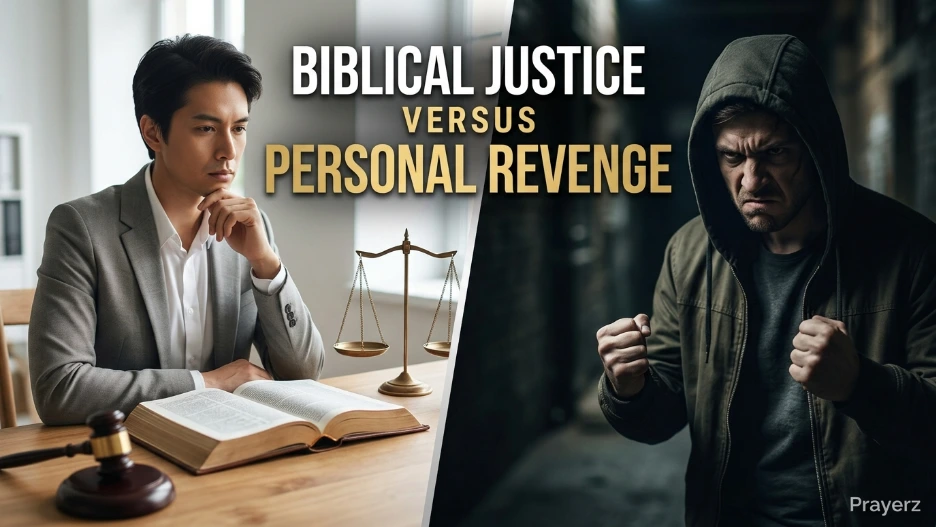
The Bible makes an important distinction between justice and revenge.
Justice
Biblical justice seeks what is right according to God’s standards.
Its goals include:
- Protecting innocent people.
- Holding wrongdoers accountable.
- Restoring peace whenever possible.
- Honoring God’s righteousness.
Justice may involve courts, church discipline, lawful consequences, or other legitimate means established by God.
Revenge
Personal revenge is different.
Its goal is often to satisfy anger rather than pursue righteousness.
Revenge usually focuses on:
- Making someone suffer.
- Returning hurt for hurt.
- Acting from bitterness.
- Taking God’s place as judge.
Romans 12 reminds believers that vengeance belongs to God because only He knows every heart, every motive, and every circumstance.
When we surrender revenge to God, we acknowledge that His justice is wiser than our own.
How to Respond When Someone Has Hurt You Deeply
Reading Bible verses is only the beginning. God’s Word is meant to transform the way we think, pray, and respond.
Here are practical, biblical steps for dealing with hatred and the desire for revenge.
1. Admit Your Feelings to God
God already knows your heart.
Instead of pretending everything is fine, honestly tell Him:
- “Lord, I’m angry.”
- “I’m hurt.”
- “I don’t know how to forgive.”
- “Please help me.”
Honest prayer opens the door for healing.
2. Remember That Forgiveness Is a Process
Forgiveness is rarely a one-time event.
For deep wounds, it may be a daily decision.
Each time painful memories return, choose once again to place the offense into God’s hands.
Over time, God’s grace softens even deeply wounded hearts.
3. Pray for Wisdom, Not Revenge
Ask questions like:
- “Lord, what would honor You?”
- “How should I respond?”
- “Should I establish healthier boundaries?”
- “Should I seek reconciliation?”
- “Should I involve wise spiritual leaders?”
God promises wisdom to those who ask Him in faith (James 1:5).
4. Set Healthy Boundaries
Forgiving someone does not always mean restoring the relationship immediately.
If someone continues to abuse, manipulate, threaten, or exploit you, Scripture does not require you to remain in harm’s way.
Healthy boundaries can exist alongside genuine forgiveness.
Jesus Himself sometimes withdrew from hostile crowds because His time had not yet come (John 7:1; John 10:39).
Forgiveness and wisdom work together.
5. Focus on Your Own Spiritual Growth
Bitterness consumes enormous emotional energy.
Instead of constantly replaying the offense:
- Spend time in Scripture.
- Pray consistently.
- Worship faithfully.
- Serve others.
- Stay connected to a healthy church community.
As your relationship with God deepens, His peace gradually replaces resentment.
6. Trust God’s Perfect Timing
One of the hardest parts of injustice is waiting.
Sometimes consequences appear immediately.
Other times they seem delayed for years.
But Scripture repeatedly assures believers that God never overlooks evil.
His justice is perfect—even when His timing is different from ours.
Key Biblical Lessons to Remember
As we’ve explored these Bible passages, several truths consistently emerge:
- God understands your anger and welcomes honest prayer.
- Scripture never encourages personal murder or revenge.
- Justice belongs to God.
- Jesus calls believers to love and pray for their enemies.
- Forgiveness releases your heart from the prison of bitterness.
- Healthy boundaries are compatible with biblical forgiveness.
- God’s justice is always perfect, even when delayed.
- Through the Holy Spirit, God can transform hatred into peace.
These truths don’t minimize the pain you’ve experienced. Instead, they offer a path toward healing that protects your heart while honoring God.
A Prayer for Healing from Anger and Revenge
Heavenly Father,
You know every wound I carry, every injustice I have experienced, and every painful memory that still hurts my heart. Nothing is hidden from You.
Lord, I confess that there are times when anger, bitterness, and the desire for revenge seem overwhelming. I don’t want these feelings to control my life or pull me away from You.
Please help me trust that You are the perfect Judge. Teach me to release my pain into Your hands instead of trying to carry it alone. Give me the strength to forgive, even when forgiveness feels difficult. Fill my heart with Your peace, wisdom, and compassion.
Protect me from bitterness, and help me respond in ways that honor Jesus. Where boundaries are needed, give me courage. Where healing is needed, bring restoration. Justice is needed, remind me that You see everything and will always do what is right.
Thank You for loving me even when I struggle. Thank You for the forgiveness I have received through Christ. May Your Holy Spirit transform my heart day by day until I reflect Your grace more fully.
In the name of Jesus Christ, Amen.
FAQs
1. Does the Bible ever encourage believers to kill their enemies?
No. While the Bible records wars, acts of judgment, and honest prayers about enemies within specific historical and covenant contexts, it does not instruct believers to murder people because of personal hatred or revenge. Jesus instead teaches His followers to love their enemies, pray for those who persecute them, and leave ultimate judgment to God.
2. Is it sinful to feel hatred toward someone who hurt me?
Feeling intense anger after being deeply wounded is a real human experience. However, Scripture warns against allowing anger to grow into lasting hatred, bitterness, or a desire for personal revenge. God invites you to bring those emotions to Him so He can begin the work of healing.
3. What should I do if I keep thinking about revenge?
Turn those thoughts into prayer. Read passages such as Romans 12, Psalm 37, Matthew 5, and Ephesians 4. Speak honestly to God, seek wise counsel from mature believers, and ask the Holy Spirit to renew your mind. If these thoughts become persistent, distressing, or difficult to control, consider talking with a trusted pastor or a qualified Christian mental health professional.
4. Does loving my enemies mean I must trust them again?
No. Love and trust are not identical. Someone may need to rebuild trust over time, and in some situations reconciliation is neither safe nor appropriate. Scripture encourages forgiveness while also affirming wisdom, discernment, and healthy boundaries.
5. How is forgiveness different from excusing someone’s actions?
Forgiveness does not declare that evil was acceptable. Instead, it releases your personal desire for revenge and entrusts justice to God. A person can forgive while still acknowledging the seriousness of the wrong and pursuing appropriate legal or protective action when necessary.
6. What if the person who hurt me never apologizes?
Biblical forgiveness is not dependent on another person’s response. You can choose to release bitterness and entrust justice to God even if the offender never admits wrongdoing. That does not remove their responsibility before God or eliminate appropriate consequences.
7. Why did David pray such strong prayers against his enemies?
David’s prayers reflect the deep anguish of someone who repeatedly suffered injustice. Rather than taking revenge himself, he brought his pain before God and trusted the Lord to judge righteously. These prayers teach us to be honest with God while leaving judgment in His hands.
8. Can Christians seek justice through the legal system?
Yes. Scripture distinguishes between personal revenge and legitimate justice. Reporting crimes, protecting victims, and using lawful means to address wrongdoing can be appropriate and consistent with biblical principles. The key is seeking justice rather than acting from hatred or vengeance.
9. What is the greatest example of loving enemies in the Bible?
Jesus Christ is the perfect example. While hanging on the cross, He prayed, “Father, forgive them, for they know not what they do” (Luke 23:34). His response demonstrates extraordinary mercy without denying the reality of sin or the need for God’s justice.
10. How can I overcome bitterness over time?
Healing often comes through daily prayer, regular study of Scripture, honest conversations with trusted believers, worship, and dependence on the Holy Spirit. As you continue surrendering your pain to God, He gradually replaces bitterness with peace and strengthens you to walk in freedom.
Final Encouragement
If you came looking for Bible verses about wanting to kill your enemies, perhaps your heart is carrying wounds that few people can see. God sees them. He knows the betrayal, the injustice, the sleepless nights, and the questions that linger in your mind. He does not ask you to pretend the pain isn’t real.
At the same time, God offers something far better than revenge. He offers healing for the brokenhearted, wisdom for the confused, strength for the weary, and hope for those who feel trapped by anger. The cross of Jesus Christ shows that God takes both sin and mercy seriously. Through Christ, justice and grace meet in a way no human effort ever could.
As you continue to seek the Lord, remember this truth: you are never asked to carry the burden of vengeance. That burden belongs to God alone. Your calling is to trust Him, pursue righteousness, guard your heart from bitterness, and allow His Spirit to shape you into the likeness of Christ.
When you surrender your deepest hurts to the Lord, you discover that His peace is stronger than hatred, His justice is more perfect than revenge, and His love is powerful enough to transform even the most wounded heart. May you find comfort in His presence, courage in His promises, and lasting hope in His unfailing love.
