
Introduction
Few things are more painful for a Christian than hearing God’s name mocked or seeing people openly reject, ridicule, or insult Him. Whether it’s on social media, in entertainment, at school, in the workplace, or even among family members, believers often wonder how they should respond when people make fun of God, Jesus Christ, or the Bible.
Perhaps you’ve asked questions like:
- Does God punish those who mock Him?
- What does the Bible say about people who ridicule God?
- Should Christians argue with mockers or pray for them?
- Can someone who once mocked God still receive forgiveness?
These are important questions because Scripture speaks clearly about mockery, pride, unbelief, and God’s justice. Yet the Bible also reveals God’s incredible patience, mercy, and desire for repentance.
Throughout history, people have mocked God’s prophets, His commandments, His Son Jesus Christ, and His followers. Some laughed because they were arrogant. Others rejected God because they loved sin more than truth. Still others mocked what they did not understand.
But the Bible reminds us that God is never threatened by human ridicule. He remains sovereign, holy, just, and worthy of worship regardless of what people say or do. Every mocking word spoken against Him will ultimately be answered by His perfect justice, while every repentant sinner can still find mercy through Jesus Christ.
If you have been discouraged by the disrespect shown toward God in today’s world, these Bible verses will strengthen your faith, remind you of God’s authority, and teach you how to respond with both courage and Christlike love.
Quick Answer
The Bible teaches that mocking God is a serious sin rooted in pride, unbelief, and rebellion against His authority. Scripture warns that no one can mock God without consequences because “God is not mocked” (Galatians 6:7). At the same time, the Bible shows that God is patient and desires people to repent before judgment comes (2 Peter 3:9). Christians are called not to imitate mockers but to remain faithful, pray for those who oppose God, and trust the Lord to judge righteously in His perfect timing.
What Does the Bible Say About People Who Mock God?
The Bible mentions mockers from Genesis to Revelation. They appear in many forms:
- Those who laugh at God’s warnings.
- Those who reject His Word.
- Those who insult His prophets.
- Those who ridicule Jesus Christ.
- Those who persecute believers because of their faith.
- Those who deny God’s coming judgment.
Mockery is more than making jokes about religion. Biblically, it reflects a heart that refuses to humble itself before God.
Scripture repeatedly connects mocking with other sinful attitudes, including:
- Pride
- Arrogance
- Foolishness
- Unbelief
- Rebellion
- Hardened hearts
- Self-righteousness
The Bible also makes an important distinction. While God strongly condemns mockery against Him, He continually offers mercy to anyone willing to repent. Some of the people who once opposed God later became devoted followers after encountering His grace.
This reminds us that Christians should never celebrate another person’s judgment. Instead, we should pray that mockers become worshippers through the transforming power of Jesus Christ.
Why Do People Mock God?
Understanding why people mock God helps believers respond with wisdom instead of anger.
Scripture reveals several common reasons.
Pride
Many people mock God because they believe they are wiser than their Creator.
Proverbs repeatedly warns that pride blinds people from receiving wisdom.
Unbelief
Some reject God simply because they refuse to believe His Word.
Instead of seeking truth, they dismiss it with ridicule.
Love of Sin
Jesus taught that people often reject the light because they love darkness (John 3:19–20).
Mockery sometimes becomes a defence mechanism that allows people to justify sinful lifestyles.
Spiritual Blindness
Paul explains that spiritual truths cannot be fully understood apart from God’s Spirit (1 Corinthians 2:14).
Without spiritual understanding, many dismiss God’s truth as foolishness.
Influence of the World
Modern culture often celebrates irreverence toward God while praising self-sufficiency and personal autonomy.
The Bible warned long ago that such attitudes would increase in the last days.
Bible Verses About People Who Mock God
1. Galatians 6:7 — God Is Not Mocked
“Do not be deceived: God is not mocked, for whatever one sows, that will he also reap.” (Galatians 6:7, ESV)
Meaning and Context
This is perhaps the clearest Bible verse about mocking God.
Paul writes to believers about spiritual responsibility and reminds them that God’s moral laws cannot be ignored. While people may believe they can reject God’s commands without consequence, Scripture declares that every action produces a harvest.
To “mock” God here means attempting to treat Him with contempt or believing one can deceive Him while continuing in sin.
God sees every heart, every motive, and every action.
Practical Application
Many people believe they can live however they please without accountability.
Galatians reminds believers that God sees beyond outward appearances. Every choice—good or bad—has spiritual consequences.
Rather than fearing this truth, Christians should allow it to inspire faithful obedience and holy living.
Why This Verse Matters Today
Our culture often encourages people to ignore biblical truth.
Galatians 6:7 reminds us that God’s standards never change, even when society does.
2. Proverbs 19:29 — Judgment Awaits Mockers
“Judgments are prepared for mockers, and beatings for the backs of fools.”
Meaning and Context
The book of Proverbs contrasts wisdom with foolishness.
Mockers reject correction, laugh at righteousness, and refuse instruction.
Because they continually harden their hearts, Scripture warns that judgment eventually follows.
This proverb is not celebrating punishment but warning people to change while there is still time.
Practical Application
Every believer should examine his or her own heart.
Do we humbly receive correction from God’s Word, or do we dismiss it?
God blesses teachable hearts but opposes persistent pride.
Why This Verse Matters Today
In an age where disrespect and sarcasm are often admired, Proverbs reminds us that genuine wisdom begins with reverence for God.
3. Psalm 1:1 — Avoid the Seat of Mockers
“Blessed is the one who does not walk in step with the wicked or stand in the way that sinners take or sit in the company of mockers.”
Meaning and Context
Psalm 1 opens the entire book of Psalms by describing two ways of living.
The righteous delight in God’s law.
The wicked gradually move deeper into sin.
Notice the progression:
- Walking
- Standing
- Sitting
Eventually, sinners become comfortable among mockers.
Mockery is portrayed as the final stage of hardened rebellion.
Practical Application
Christians should be careful about the influences they allow into their lives.
Constant exposure to cynical attitudes toward God can slowly weaken spiritual sensitivity.
Instead, surround yourself with believers who encourage faith and biblical wisdom.
Why This Verse Matters Today
Entertainment, online conversations, and social media often normalise mocking Christianity.
Psalm 1 encourages believers to choose friendships and influences that strengthen rather than weaken faith.
4. Proverbs 3:34 — God Opposes the Proud
“He mocks proud mockers but shows favour to the humble and oppressed.”
Meaning and Context
This proverb reveals God’s response to pride.
Those who arrogantly mock Him eventually discover that His justice cannot be escaped.
Meanwhile, God pours grace upon those who approach Him with humility.
The New Testament repeats this truth in James 4:6 and 1 Peter 5:5.
Practical Application
Humility is one of the greatest marks of genuine faith.
Rather than trying to prove ourselves right, believers should submit to God’s wisdom and trust His timing.
Why This Verse Matters Today
Modern culture often rewards self-promotion and pride.
God, however, honours humble hearts that seek Him sincerely.
5. Isaiah 28:22 — Stop Your Mocking
“Now stop your mocking, or your chains will become heavier; the Lord, the LORD Almighty, has told me of the destruction decreed against the whole land.”
Meaning and Context
Isaiah delivered this warning to leaders in Judah who ignored God’s warnings.
Instead of repenting, they laughed at God’s prophet.
Isaiah pleaded with them to stop mocking before judgment became unavoidable.
This verse demonstrates God’s patience.
Before judgment came, He first sent repeated warnings.
Practical Application
God often warns people through Scripture, conviction, faithful preaching, and life circumstances.
Ignoring these warnings only hardens the heart.
A wise person responds quickly when God calls for repentance.
Why This Verse Matters Today
Many dismiss biblical teaching as outdated or unnecessary.
Isaiah reminds us that rejecting God’s warnings never removes their truth.
6. 2 Peter 3:3–4 — Mockers in the Last Days
“Above all, you must understand that in the last days scoffers will come, scoffing and following their own evil desires. They will say, ‘Where is this “coming” he promised?'”
Meaning and Context
Peter warned believers that mockers would become increasingly common before Christ’s return.
These scoffers question God’s promises, deny future judgment, and live according to their own sinful desires.
Their mockery is rooted not in genuine investigation but in a refusal to submit to God’s authority.
Practical Application
Christians should not be surprised when people ridicule biblical truth or question the return of Christ.
Instead of becoming discouraged, believers should stand firm in faith, remembering that God’s timing is perfect.
Why This Verse Matters Today
This passage feels remarkably relevant in a culture where many openly dismiss Christianity and mock the hope of Christ’s second coming.
Peter encourages believers to remain confident because God’s promises never fail.
People Who Mocked God’s Messengers Eventually Faced God’s Justice
Throughout Scripture, people rarely began by mocking God directly. Instead, they mocked His prophets, His messengers, His Word, and ultimately His Son, Jesus Christ. God took this seriously because rejecting His messengers was, in reality, rejecting Him.
These passages reveal both God’s justice and His extraordinary patience. Time and again, He warned people before judgment came, giving them opportunities to repent.
7. 2 Chronicles 36:15–16 — They Mocked God’s Messengers
“The LORD, the God of their ancestors, sent word to them through his messengers again and again, because he had pity on his people and on his dwelling place. But they mocked God’s messengers, despised his words and scoffed at his prophets until the wrath of the LORD was aroused against his people and there was no remedy.” (NIV)
Meaning and Context
This passage summarises one of Israel’s darkest periods.
For generations, God lovingly sent prophets such as Isaiah, Jeremiah, Zephaniah, and others to call His people back to Himself. These prophets warned about idolatry, injustice, and rebellion.
Instead of listening, many ridiculed them.
The tragedy is not simply that they ignored wise advice—it is that they rejected God’s repeated acts of mercy. The phrase “again and again” reveals God’s compassion. He continued reaching out long after people deserved judgment.
Eventually, Jerusalem fell to Babylon because the nation refused to repent.
Practical Application
God often speaks through His Word, faithful pastors, Christian friends, parents, teachers, and the conviction of the Holy Spirit.
We should never dismiss biblical correction simply because it is uncomfortable.
A teachable heart is always willing to listen.
Why This Verse Matters Today
Many people laugh at biblical preaching or dismiss God’s standards as outdated.
This passage reminds believers that rejecting God’s truth has consequences, but it also highlights His amazing patience before judgment comes.
8. Jeremiah 20:7–8 — Jeremiah Was Mocked for Speaking God’s Word
“Whenever I speak, I cry out proclaiming violence and destruction. So the word of the LORD has brought me insult and reproach all day long.”
Meaning and Context
Jeremiah is often called the “weeping prophet.”
God commissioned him to warn Judah about coming judgment, but instead of honouring his message, many mocked him, insulted him, imprisoned him, and rejected him.
Despite overwhelming opposition, Jeremiah continued proclaiming God’s truth because he knew obedience mattered more than popularity.
Practical Application
Following Christ does not guarantee approval from others.
Sometimes standing for biblical truth means facing ridicule.
Like Jeremiah, Christians are called to remain faithful even when obedience is costly.
Reflection
In today’s culture, believers may experience criticism for defending biblical values. Jeremiah encourages us to measure success by faithfulness rather than public acceptance.
9. Nehemiah 4:1–3 — God’s Work Was Mocked
“When Sanballat heard that we were rebuilding the wall, he became angry and was greatly incensed. He ridiculed the Jews.”
Meaning and Context
After returning from exile, God’s people began rebuilding Jerusalem’s walls.
Their enemies mocked them, saying their work was weak and destined to fail.
They even joked that a fox walking on the wall would knock it down.
The ridicule was intended to discourage God’s people from completing their God-given assignment.
Instead of arguing with their critics, Nehemiah prayed and continued working.
Practical Application
Whenever believers step forward in obedience, opposition often follows.
People may criticise your ministry, question your faith, or laugh at your commitment to Christ.
Don’t allow ridicule to distract you from what God has called you to do.
Reflection
One of Satan’s favourite tactics is discouragement.
Nehemiah teaches us that prayer and perseverance accomplish far more than endless arguments with critics.
Bible Verses About People Who Mocked Jesus Christ
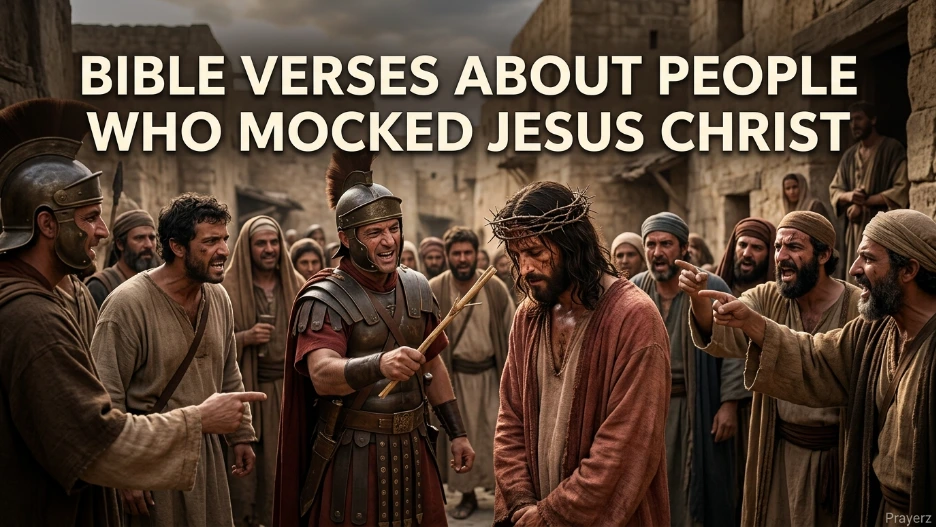
The greatest example of human mockery occurred during the suffering and crucifixion of Jesus.
The Son of God willingly endured insults, humiliation, and rejection so that sinners—including those who mocked Him—could receive salvation.
His response teaches believers how to face ridicule with grace and unwavering trust in the Father.
10. Matthew 27:29–31 — Soldiers Mocked Jesus
“They twisted together a crown of thorns and set it on his head. They put a staff in his right hand. Then they knelt in front of him and mocked him. ‘Hail, king of the Jews!’ they said.”
Meaning and Context
Roman soldiers mocked Jesus by dressing Him in a fake royal robe, placing a painful crown of thorns on His head, and sarcastically pretending to honour Him as King.
Ironically, they mocked the very truth they could not see.
Jesus truly is the King of kings.
Their ridicule could not change His identity.
Practical Application
People may misunderstand your faith or ridicule your commitment to Christ.
Remember that Jesus endured far greater rejection and remained faithful.
Our identity is found in Him, not in the opinions of others.
Reflection
Jesus’ quiet endurance demonstrates incredible humility.
Instead of seeking revenge, He continued fulfilling God’s plan of redemption.
11. Luke 23:35–37 — Leaders and Soldiers Mocked Jesus on the Cross
“The people stood watching, and the rulers even sneered at him. They said, ‘He saved others; let him save himself if he is God’s Messiah, the Chosen One.'”
Meaning and Context
As Jesus hung on the cross, religious leaders and Roman soldiers mocked His apparent weakness.
They wrongly assumed that suffering proved He was powerless.
In reality, His willingness to remain on the cross demonstrated His immeasurable love.
If Jesus had chosen to save Himself, humanity could not have been saved.
Practical Application
Sometimes God’s greatest work happens in situations that appear weak from a worldly perspective.
Never judge God’s power by present circumstances.
He often works through sacrifice, patience, and quiet faithfulness.
Reflection
What looked like defeat became the greatest victory in history.
God can transform apparent setbacks into eternal triumphs.
12. Matthew 27:39–44 — Passers-by Mocked Jesus
“Those who passed by hurled insults at him, shaking their heads.”
Meaning and Context
Crowds mocked Jesus, quoting His earlier statements about the temple while completely misunderstanding His mission.
Even the criminals crucified beside Him initially joined the insults.
This fulfilled Old Testament prophecy about the suffering Messiah.
Yet Jesus remained silent and continued His mission of redemption.
Practical Application
Believers should expect that not everyone will understand God’s purposes immediately.
Faith often requires trusting God when others misunderstand or criticise us.
Reflection
Jesus never allowed mockery to distract Him from His mission.
Neither should we.
Bible Verses About Scoffers in the Last Days
The New Testament repeatedly warns that mockery of God will increase before Christ returns.
Rather than creating fear, these passages prepare believers to remain steadfast and hopeful.
13. Jude 18–19 — Scoffers Follow Their Own Desires
“In the last times there will be scoffers who will follow their own ungodly desires.”
Meaning and Context
Jude warns the church about false teachers and mockers who reject God’s authority.
Their lifestyle reveals their beliefs.
Instead of pursuing holiness, they follow selfish desires.
Scripture consistently links mockery with moral rebellion.
When people reject God’s authority, they often attempt to ridicule those who obey Him.
Practical Application
Christians should measure teaching by Scripture rather than popularity.
Not every confident voice represents biblical truth.
Discernment is essential.
Reflection
God calls believers to stand firmly on His Word, even when the surrounding culture celebrates values contrary to Scripture.
14. Psalm 73:8–9 — The Proud Speak Against Heaven
“They scoff, and speak with malice; with arrogance they threaten oppression. Their mouths lay claim to heaven, and their tongues take possession of the earth.”
Meaning and Context
Asaph struggled because wicked people appeared successful.
They openly mocked God while enjoying wealth and influence.
Eventually, however, God revealed their true end.
Temporary success never cancels eternal accountability.
Practical Application
When unbelievers seem to prosper while mocking God, believers may feel discouraged.
Psalm 73 reminds us to evaluate life from God’s eternal perspective rather than temporary appearances.
Reflection
God’s justice may seem delayed, but it is never absent.
His timing is always perfect.
The Difference Between Honest Doubt and Mocking God
One important biblical principle is that not every question is mockery.
The Bible welcomes sincere seekers.
Many faithful believers wrestled with difficult questions.
- Abraham asked questions.
- Moses questioned his calling.
- David poured out his doubts in the Psalms.
- Habakkuk asked why evil prospered.
- Thomas struggled to believe until he saw the risen Christ.
God did not condemn these people because they approached Him with humility and a desire to know the truth.
Mockery is different.
A mocker has already decided not to believe. Rather than seeking answers, they ridicule God’s truth, reject correction, and encourage others to do the same.
As believers, we should welcome honest questions while responding to deliberate mockery with patience, wisdom, and unwavering confidence in God’s Word.
Biblical Examples of People Who Changed After Opposing God
One of the greatest themes in Scripture is redemption.
Not everyone who opposed God remained His enemy.
Consider these examples:
Saul Became Paul
Saul persecuted Christians, approved of Stephen’s death, and tried to destroy the early church (Acts 8–9).
After encountering the risen Christ, he became the Apostle Paul, one of Christianity’s greatest missionaries.
God’s grace completely transformed his life.
The Roman Centurion
The Roman soldiers participated in Jesus’ crucifixion.
Yet one centurion, witnessing Christ’s death, declared:
“Surely this was the Son of God!” (Matthew 27:54)
Even at the cross, hearts could still change.
Many Priests Believed
Acts 6:7 records that many Jewish priests eventually became obedient to the faith.
People who once resisted God’s work later embraced the gospel.
These examples remind us never to give up praying for people who currently mock or reject God.
The Lord who transformed Saul into Paul is still changing lives today.
How Should Christians Respond When People Mock God?
One of the most difficult challenges believers face is deciding how to respond when someone ridicules God, Jesus Christ, or the Christian faith. Our natural reaction may be anger, hurt, or the desire to argue. However, Scripture calls us to respond differently.
Jesus never instructed His followers to answer mockery with mockery. Instead, He taught us to respond with truth, humility, wisdom, and love while remaining firmly committed to God’s Word.
Here are several biblical principles to guide our response.
1. Remain Faithful Instead of Becoming Defensive
People’s opinions about God do not change who He is.
Whether the world honours Him or rejects Him, the Lord remains the Creator, King, and Judge over all.
When Jesus was mocked before His crucifixion, He did not panic or try to prove Himself through dramatic displays of power. He trusted His Father’s plan completely.
Likewise, believers can rest confidently in God’s truth without feeling the need to win every argument.
Key Verse
“Commit your way to the LORD; trust in him and he will do this.” (Psalm 37:5)
Practical Step
When someone mocks your faith, pause before reacting. Ask the Holy Spirit for wisdom to respond in a way that honours Christ rather than your emotions.
2. Answer With Gentleness and Respect
Christians should never compromise biblical truth, but neither should we speak harshly or arrogantly.
1 Peter 3:15
“Always be prepared to give an answer to everyone who asks you to give the reason for the hope that you have. But do this with gentleness and respect.”
Meaning
Peter wrote to believers facing persecution.
Rather than responding with bitterness, they were to explain their faith graciously.
Truth spoken in love often reaches hearts more effectively than heated arguments.
Practical Application
Whether speaking with an atheist, sceptic, or someone who simply misunderstands Christianity, aim to reflect the character of Jesus.
Remember that your attitude often speaks louder than your words.
3. Pray for Those Who Mock God
One of Jesus’ most remarkable commands is to pray for those who oppose us.
Some of today’s strongest critics may become tomorrow’s devoted followers of Christ.
After all, Saul once persecuted believers before becoming the Apostle Paul.
Matthew 5:44
“Love your enemies and pray for those who persecute you.”
Practical Application
Instead of responding with anger, pray that God opens their hearts.
Ask Him to reveal His love, truth, and saving grace.
Prayer changes both the person we pray for and our own hearts.
4. Avoid Foolish Arguments
Not every debate is worth joining.
Some people ask sincere questions because they genuinely want to understand.
Others only wish to provoke, insult, or create conflict.
Scripture encourages believers to recognise the difference.
Proverbs 26:4–5
“Do not answer a fool according to his folly, or you yourself will be just like him. Answer a fool according to his folly, or he will be wise in his own eyes.”
Meaning
These verses are not contradictory.
Rather, they teach discernment.
Sometimes the wisest response is silence.
Other times, a calm biblical answer is appropriate.
The Holy Spirit gives wisdom for each situation.
5. Continue Living a Godly Life
Your everyday life is one of the strongest testimonies you possess.
People may dismiss your words, but they cannot ignore a life marked by love, integrity, forgiveness, humility, and peace.
Matthew 5:16
“Let your light shine before others, that they may see your good deeds and glorify your Father in heaven.”
Practical Application
Allow your conduct to reflect Christ.
Faithfulness at work, kindness toward neighbours, honesty in business, patience with family, and compassion toward strangers demonstrate the transforming power of the gospel.
Lessons We Learn From Bible Verses About People Who Mock God
When we study these passages together, several important biblical truths become clear.
God Is Never Threatened by Human Mockery
People may ridicule God’s name, deny His existence, or reject His commands.
None of these actions diminish His authority.
God remains sovereign over heaven and earth.
His purposes cannot be stopped by human pride.
Pride Leads People Away From God
Nearly every biblical mocker shared one common characteristic—pride.
Instead of humbly seeking truth, they believed they already possessed all the answers.
Proverbs consistently teaches that humility opens the door to wisdom, while pride leads to destruction.
God Is Patient Before Bringing Judgment
One of the most encouraging themes in Scripture is God’s patience.
Before judgment came upon Israel, God repeatedly sent prophets.
Before Nineveh was destroyed, He sent Jonah.
Before Jerusalem fell, He gave countless warnings.
Even today, God continues extending His invitation through the gospel.
As 2 Peter 3:9 explains:
“The Lord is not slow in keeping his promise… Instead he is patient with you, not wanting anyone to perish, but everyone to come to repentance.”
This should fill believers with gratitude and compassion.
Every Person Still Has Hope Through Jesus Christ
Perhaps the most beautiful truth in this study is that God’s grace is greater than human rebellion.
The Bible contains many people who once opposed God’s work before becoming faithful servants.
The gospel offers forgiveness even to those who have mocked, doubted, rejected, or ignored God.
Anyone who sincerely repents and trusts in Jesus Christ can receive complete forgiveness.
How to Apply These Bible Verses in Daily Life
Understanding Scripture is only the beginning. God desires His Word to transform the way we think, speak, and live.
Here are practical ways to apply these truths every day.
1. Develop a Deep Reverence for God
Approach God with worship, gratitude, and humility.
Regular prayer, Bible study, and praise cultivate a heart that honours Him.
2. Guard Your Own Speech
Avoid using God’s name carelessly.
Speak about spiritual matters respectfully and lovingly.
Our words should always reflect our reverence for the Lord.
3. Stand Firm When Your Faith Is Ridiculed
Expect opposition without becoming discouraged.
Jesus warned His followers that they would face persecution, but He also promised His presence and peace.
Remember that faithfulness matters more than popularity.
4. Respond With Grace
When people mock Christianity, avoid becoming argumentative.
Choose patience, wisdom, and kindness while remaining faithful to biblical truth.
Sometimes your calm response will speak louder than any debate.
5. Pray for Revival
Instead of focusing only on growing unbelief, pray that God will bring spiritual awakening to families, churches, communities, and nations.
History shows that God often brings revival during spiritually dark times.
6. Encourage Fellow Believers
Many Christians feel discouraged by increasing hostility toward biblical truth.
Offer encouragement through prayer, fellowship, Scripture, and practical support.
Together, believers strengthen one another.
A Prayer for Wisdom and Faithfulness
Heavenly Father,
Thank You for revealing Yourself through Your Word and through Your Son, Jesus Christ. You alone are holy, righteous, and worthy of all honour, glory, and praise.
Lord, our hearts are often saddened when we see people mocking Your name, rejecting Your truth, or ridiculing those who follow You. Help us never to respond with hatred or pride. Instead, fill us with the love, wisdom, courage, and gentleness of Christ.
Strengthen our faith so that we remain steadfast even when the world opposes Your truth. Guard our hearts from fear, anger, and discouragement. Teach us to trust Your perfect justice and Your perfect timing.
We pray for those who mock You today. Open their eyes to the beauty of the gospel. Soften hardened hearts, remove spiritual blindness, and lead them to repentance and saving faith in Jesus Christ.
Help us to honour You in our words, attitudes, and actions every day. May our lives point others toward the hope found only in Christ.
Thank You for Your patience, mercy, and unfailing love. Keep us faithful until the day we see You face to face.
In the precious name of Jesus,
Amen.
FAQs
1. What does the Bible say about people who mock God?
The Bible teaches that mocking God is a serious expression of pride and unbelief. Verses such as Galatians 6:7, Proverbs 19:29, and 2 Peter 3:3–4 warn that God is not mocked and that those who persist in rejecting Him will ultimately face His righteous judgment. At the same time, Scripture emphasises God’s patience and His desire for repentance.
2. What does “God is not mocked” mean in Galatians 6:7?
This phrase means that no one can deceive God or escape the consequences of rejecting His truth. Every person will reap what they sow. God’s justice is certain, even if it is not immediate.
3. Is mocking God considered blasphemy?
Mocking God can be a form of blasphemy because it dishonours His holy name and rejects His authority. However, the Bible distinguishes between persistent, hardened rebellion and those who repent. God’s grace is available to all who turn to Him in faith.
4. Can someone who mocked God be forgiven?
Yes. The gospel offers forgiveness to anyone who genuinely repents and places their trust in Jesus Christ. The Apostle Paul, once a persecutor of Christians, is a powerful example of God’s transforming grace.
5. Why does God allow people to mock Him?
God has given humanity the freedom to choose whether to accept or reject Him. His patience provides time for repentance, but Scripture teaches that every person will one day stand before Him and give an account of their life.
6. How should Christians respond when someone mocks their faith?
Believers should respond with gentleness, respect, wisdom, and love. While standing firmly on biblical truth, Christians should avoid unnecessary arguments, pray for those who oppose them, and allow their lives to reflect the character of Christ.
7. Are mockers mentioned in Bible prophecy?
Yes. Passages such as 2 Peter 3:3–4 and Jude 18–19 explain that scoffers and mockers will become increasingly common in the last days as many reject God’s truth and follow their own desires.
8. Did people mock Jesus?
Yes. Jesus was mocked by Roman soldiers, religious leaders, passers-by, and even criminals during His crucifixion. Despite this, He responded with humility, forgiveness, and complete obedience to the Father’s will.
9. Should Christians pray for people who mock God?
Absolutely. Jesus commanded His followers to love their enemies and pray for those who persecute them (Matthew 5:44). Prayer reflects God’s heart, which desires people to repent and come to the knowledge of the truth.
10. What is the main lesson from Bible verses about people who mock God?
The central lesson is that God is holy, sovereign, and worthy of reverence. While mocking Him brings serious consequences, His mercy remains available to everyone who humbly turns to Him through Jesus Christ.
Final Encouragement
Living in a world where God’s name is often mocked can be discouraging, but it should never cause believers to lose hope. The same Bible that warns against mocking God also proclaims His boundless mercy, unwavering faithfulness, and unstoppable plan of redemption.
Remember that every insult directed at God does not diminish His glory. He is still the Creator of heaven and earth, the righteous Judge, and the loving Father who calls people to Himself through Jesus Christ. His kingdom cannot be shaken, and His promises cannot fail.
When you encounter mockery, do not allow bitterness or fear to take root. Instead, let your confidence rest in the Lord. Stand firmly on His Word, respond with grace, pray earnestly for those who oppose the gospel, and trust that God is working even when you cannot see it.
Above all, keep your eyes on Jesus. He endured ridicule, rejection, and suffering for our salvation, yet He responded with perfect love and unwavering obedience. As His followers, we are called to reflect that same spirit—holding fast to the truth, extending compassion to others, and living each day in a way that brings honour to His name.
May these Bible verses about people who mock God strengthen your faith, deepen your reverence for the Lord, and remind you that while the world may change, God’s truth, justice, mercy, and love remain the same forever.
