

Introduction
Should Christians get tattoos?
It is one of the most frequently asked questions among believers today. Some Christians proudly display tattoos that tell their testimony of God’s grace. Others believe tattoos are sinful because of a passage in the Old Testament. Many people who became Christians after getting tattoos wonder if God still accepts them. Young believers often struggle to know whether getting a tattoo would honour God or simply follow culture.
If you’ve ever searched for Bible verses about tattoos, you’re probably looking for more than a simple “yes” or “no.” You want biblical truth. You want wisdom instead of opinions. Most importantly, you want to know what God thinks.
The Bible does mention tattoos directly—but only once. Yet Scripture provides many additional principles about the body, holiness, identity, Christian freedom, wisdom, motives, and living to glorify God. When these passages are studied in their proper context, they paint a much fuller picture than one isolated verse ever could.
Whether you already have tattoos, are considering getting one, or simply want to understand the biblical perspective, God’s Word offers clarity, grace, and guidance.
The purpose of this article is not to shame anyone or promote personal opinions. Instead, we’ll carefully examine what the Bible actually says, explore important verses in context, answer common questions, and discover principles that help every believer honour Christ in every decision.
Quick Answer
Does the Bible forbid tattoos?
The Bible directly mentions tattoos in Leviticus 19:28, where God commanded ancient Israel not to make tattoo marks associated with pagan mourning and idol worship.
However, Christians also understand that many Old Testament ceremonial and civil laws were given specifically to Israel under the Mosaic Covenant. The New Testament does not specifically command or forbid tattoos. Instead, it teaches believers to honour God with their bodies, examine their motives, avoid causing unnecessary stumbling, and make decisions that glorify Christ.
Rather than asking only, “Can a Christian get a tattoo?” the better biblical question is:
“Will this decision honour Jesus and reflect my identity in Him?”
That question leads to wisdom instead of legalism.
What Does the Bible Say About Tattoos?
The Bible’s teaching on tattoos cannot be understood by reading only one verse.
Instead, believers should consider three important biblical truths:
1. The Old Testament Contains One Direct Reference
Leviticus 19:28 prohibits tattoo marks within the context of Israel’s holiness laws.
Understanding why God gave this command is essential before applying it today.
2. The New Testament Focuses on the Heart
Jesus consistently taught that God looks beyond outward appearance.
External actions matter, but they flow from the condition of the heart (Matthew 15:18–20).
A tattoo itself does not determine someone’s spiritual condition.
Faith, obedience, repentance, and love for Christ do.
3. Christians Are Called to Glorify God
Every decision—including appearance, clothing, entertainment, speech, finances, and body art—should ultimately honour God.
Paul writes:
“Whether therefore ye eat, or drink, or whatsoever ye do, do all to the glory of God.” (1 Corinthians 10:31)
This principle becomes the foundation for every Christian decision.
Understanding Leviticus 19:28 in Context
Leviticus 19:28
“Ye shall not make any cuttings in your flesh for the dead, nor print any marks upon you: I am the LORD.”
Meaning and Context
This is the only verse that explicitly mentions tattooing.
Leviticus 19 contains numerous commands that distinguished Israel from surrounding pagan nations. Many neighbouring cultures practised ritual cutting and tattooing as acts of mourning for the dead or dedication to false gods.
God wanted His covenant people to reject these pagan religious customs because they reflected idolatry rather than worship of the true God.
The command was primarily about holiness and separation from pagan worship.
Practical Application
Christians today should avoid anything that connects them with idolatry, occult practices, or spiritual deception.
If a tattoo celebrates rebellion, false religion, or sinful lifestyles, it clearly conflicts with biblical values.
Why It Still Matters Today
Although Christians are not under the Old Covenant in the same way Israel was, the principle remains relevant:
God’s people should look different—not merely outwardly, but in wholehearted devotion to Him.
Bible Verses About Honouring God with Your Body
While the New Testament never directly commands, “Do not get tattoos,” it repeatedly teaches that our bodies belong to God.
These verses provide valuable guidance.
1 Corinthians 6:19–20
“What? know ye not that your body is the temple of the Holy Ghost which is in you… therefore glorify God in your body, and in your spirit, which are God’s.”
Meaning and Context
Paul addressed sexual immorality in Corinth, reminding believers that their bodies are sacred because God’s Spirit lives within them.
The principle extends beyond sexuality.
Our bodies are gifts from God entrusted to our care.
Practical Application
Before making permanent decisions—including tattoos—a believer should prayerfully ask:
- Does this honour God?
- Does this reflect Christ?
- Am I acting out of faith or impulse?
Why This Verse Still Matters
Our culture often says, “My body, my choice.”
Scripture reminds believers:
“My body belongs to the Lord.”
That truth changes how Christians approach every physical decision.
Romans 12:1–2
“Present your bodies a living sacrifice, holy, acceptable unto God, which is your reasonable service.”
Meaning and Context
Paul encourages Christians to dedicate every part of life to God.
Worship is not limited to church attendance.
It includes how we live every day.
Practical Application
Before getting a tattoo, consider whether it reflects a life surrendered to Christ.
A believer should never make permanent decisions simply because something is fashionable or culturally popular.
Modern Reflection
Followers of Jesus are called to live differently—not through legalism, but through joyful obedience.
1 Corinthians 10:31
“Whether therefore ye eat, or drink, or whatsoever ye do, do all to the glory of God.”
Meaning and Context
This verse establishes one of the Bible’s greatest principles for Christian decision-making.
Not every issue has a direct command.
Many choices require wisdom.
Practical Application
Ask yourself:
- Will this glorify God?
- Will it strengthen my testimony?
- Will it honour Christ five years from now?
Those questions are often more important than asking whether something is technically permissible.
Why This Verse Is Essential
God desires hearts that seek His glory above personal preference.
Colossians 3:17
“And whatsoever ye do in word or deed, do all in the name of the Lord Jesus…”
Meaning and Context
Every action should represent Christ.
Believers carry His name wherever they go.
Practical Application
If someone chooses to get a tattoo, they should honestly evaluate whether it represents Christ’s character rather than personal pride or worldly identity.
Modern Reflection
Our greatest identity is not found in body art but in belonging to Jesus.
Bible Verses About the Heart Behind Our Decisions

Scripture repeatedly teaches that motives matter.
Two people can make the same outward choice for completely different reasons.
God examines the heart.
1 Samuel 16:7
“…For the LORD seeth not as man seeth; for man looketh on the outward appearance, but the LORD looketh on the heart.”
Meaning and Context
When Samuel searched for Israel’s next king, God reminded him not to judge by appearance.
David’s heart mattered more than outward qualities.
Practical Application
Whether someone has tattoos or not does not determine spiritual maturity.
God cares most about genuine faith and obedience.
Why It Matters Today
Christians should avoid judging one another solely by outward appearance.
Proverbs 4:23
“Keep thy heart with all diligence; for out of it are the issues of life.”
Meaning and Context
Our actions flow from our hearts.
Every important decision begins internally.
Practical Application
Before getting a tattoo, ask:
- Why do I want one?
- Am I seeking attention?
- Am I expressing gratitude?
- Am I honouring Christ?
Honest motives matter.
Modern Reflection
God transforms hearts first, then behaviour.
Jeremiah 17:9–10
“The heart is deceitful above all things… I the LORD search the heart.”
Meaning and Context
Human motives are often mixed.
We easily justify choices that may not truly honour God.
Practical Application
Prayer, Scripture, and wise Christian counsel help us examine our motives honestly.
Why This Verse Remains Relevant
Christians should seek God’s wisdom rather than relying solely on personal feelings.
Psalm 139:23–24
“Search me, O God, and know my heart…”
Meaning and Context
David invites God to reveal hidden motives and sinful attitudes.
Practical Application
Before making permanent decisions, pray this passage sincerely.
Invite God to guide your desires.
Reflection
The safest decisions are made after seeking God’s direction, not merely following emotions.
Key Takeaways So Far
The Bible’s teaching about tattoos is more nuanced than a simple rule. Leviticus 19:28 warns Israel against pagan tattooing connected to idolatry, while the New Testament shifts the emphasis toward living for God’s glory, honouring Him with our bodies, and examining the motives of our hearts. Whether a Christian chooses to get a tattoo or not, the greater biblical concern is a life marked by holiness, wisdom, and devotion to Christ.
Bible Verses About Christian Freedom and Wise Decision-Making
One of the biggest questions believers ask is, “If the New Testament doesn’t specifically forbid tattoos, does that mean Christians are free to get them?”
The New Testament teaches that Christians have freedom in Christ, but that freedom should always be guided by love, wisdom, holiness, and a desire to glorify God. Freedom is never permission to act without considering the spiritual consequences of our choices.
Let’s look at several key passages.
Romans 14:13
“Let us not therefore judge one another any more: but judge this rather, that no man put a stumblingblock or an occasion to fall in his brother’s way.”
Meaning and Context
Romans 14 addresses disagreements among believers over issues where Scripture does not give an explicit command. Some Christians felt free to eat certain foods, while others believed they should abstain.
Paul’s concern was not simply who was right but how believers treated one another.
Practical Application
A tattoo may be a matter of personal conviction for many Christians. Before making a decision, consider whether it could unnecessarily damage your witness or cause confusion for someone whose faith is weaker.
This doesn’t mean living in fear of everyone’s opinions. Rather, it means exercising love alongside freedom.
Why This Verse Still Matters
Christian maturity is measured not only by what we are free to do but also by our willingness to put others before ourselves.
Romans 14:23
“For whatsoever is not of faith is sin.”
Meaning and Context
Paul concludes his discussion by teaching that believers should never act against their conscience.
If someone believes a particular action dishonours God, they should not ignore that conviction.
Practical Application
If you are uncertain about getting a tattoo, don’t rush the decision.
Spend time in prayer.
Study Scripture.
Seek wise counsel.
Wait until you have peace before God.
Modern Reflection
Many regrets come from acting too quickly.
Few regrets come from patiently seeking God’s wisdom.
Galatians 5:13
“For, brethren, ye have been called unto liberty; only use not liberty for an occasion to the flesh, but by love serve one another.”
Meaning and Context
Christian freedom is not selfish freedom.
It is freedom to live for Christ.
Paul reminds believers that liberty should never become an excuse for self-centred living.
Practical Application
Ask yourself:
- Is this decision motivated by love for Christ?
- Am I seeking God’s glory?
- Or am I simply following culture?
Why It Matters Today
The world encourages self-expression above everything else.
The gospel calls believers to Christ-centred living.
James 1:5
“If any of you lack wisdom, let him ask of God…”
Meaning and Context
God delights in giving wisdom to those who sincerely seek Him.
Not every life decision has a direct Bible verse attached to it.
Many require discernment.
Practical Application
Before making permanent decisions such as tattoos, pray specifically for wisdom.
God often leads through His Word, mature believers, prayer, and the quiet conviction of the Holy Spirit.
Reflection
Seeking God’s wisdom demonstrates spiritual maturity.
Bible Verses About Your Identity in Christ
Much of today’s tattoo culture revolves around identity.
People often choose tattoos to express who they are, remember important moments, honour loved ones, or communicate personal beliefs.
The Bible teaches that the greatest identity a Christian possesses is found not in appearance but in Christ.
2 Corinthians 5:17
“Therefore if any man be in Christ, he is a new creature…”
Meaning and Context
Salvation brings complete spiritual transformation.
Our past no longer defines us.
Our future belongs to Christ.
Practical Application
Many believers carry tattoos from before they came to faith.
This verse reminds them that God’s grace is greater than their past.
Your salvation is not determined by what is on your skin but by the work Christ has done in your heart.
Modern Reflection
Your greatest testimony is a transformed life.
Ephesians 2:10
“For we are his workmanship, created in Christ Jesus unto good works…”
Meaning and Context
The Greek word translated “workmanship” refers to a masterpiece or work of art.
God Himself is shaping every believer.
Practical Application
Whether someone chooses to get a tattoo or not, they should remember that they already bear the signature of the Creator.
Their greatest beauty comes from belonging to Him.
Why This Verse Is Encouraging
God is continually transforming His people into the image of Christ.
Galatians 2:20
“I am crucified with Christ: nevertheless I live; yet not I, but Christ liveth in me…”
Meaning and Context
Paul explains that his old life has been replaced by a new life centred on Jesus.
His identity is no longer built on personal achievement or appearance.
Practical Application
Our first question should never be,
“What makes me look unique?”
Instead, ask,
“What best reflects Christ?”
Reflection
Christ is our true identity.
Everything else is secondary.
Colossians 3:3
“For ye are dead, and your life is hid with Christ in God.”
Meaning and Context
Believers belong completely to Christ.
Our security and identity are found in Him.
Practical Application
Whether tattooed or not, Christians should build their identity on God’s love rather than external appearance.
Why It Remains Relevant
Culture constantly changes.
Christ never does.
Should Christians Judge People Who Have Tattoos?
This question deserves careful attention because many believers have experienced hurt, rejection, or misunderstanding over their appearance.
Some received tattoos before knowing Christ.
Others have tattoos that commemorate significant moments of faith or family.
Still others regret tattoos they received during difficult seasons of life.
The Bible consistently teaches believers to show grace while also upholding truth.
Matthew 7:1–5
“Judge not, that ye be not judged.”
Meaning and Context
Jesus does not forbid all discernment.
Rather, He condemns hypocritical, self-righteous judgment.
Practical Application
Seeing a tattoo tells us very little about someone’s relationship with God.
Only the Lord fully knows a person’s heart.
Modern Reflection
Churches should be places where sinners encounter grace, not condemnation.
John 13:35
“By this shall all men know that ye are my disciples, if ye have love one to another.”
Meaning and Context
Jesus identified love—not outward appearance—as the defining mark of His followers.
Practical Application
Whether believers agree or disagree about tattoos, they should treat one another with kindness, humility, and respect.
Reflection
Love speaks louder than personal preferences.
James 2:1–4
“Have not the faith of our Lord Jesus Christ… with respect of persons.”
Meaning and Context
James warns against judging people based on outward appearance or social status.
God does not show favouritism.
Neither should His people.
Practical Application
Churches should welcome people with tattoos just as Christ welcomes repentant sinners.
The gospel transforms hearts before appearances.
Why It Matters Today
Many people first encounter Jesus because someone loved them before trying to change them.
Can Christians Who Already Have Tattoos Serve God?
Absolutely.
The New Testament is filled with examples of people whose past did not prevent God from using them.
The Apostle Paul had persecuted Christians.
Peter denied Jesus.
Mary Magdalene had a troubled past.
Yet God transformed each of them into powerful servants of His kingdom.
A tattoo does not disqualify someone from God’s grace or His calling.
If you received tattoos before coming to Christ, remember this wonderful promise:
1 John 1:9
“If we confess our sins, he is faithful and just to forgive us our sins, and to cleanse us from all unrighteousness.”
Meaning and Context
God’s forgiveness is complete.
When we repent, He does not leave us carrying shame.
Practical Application
If you regret a tattoo because it represents a sinful season, bring that regret to God.
His forgiveness is greater than your past.
Reflection
Jesus specialises in redemption.
He writes new stories from broken beginnings.
Isaiah 43:18–19
“Remember ye not the former things… behold, I will do a new thing.”
Meaning and Context
God promised Israel restoration after difficult seasons.
The principle still encourages believers today.
Practical Application
Do not allow old decisions to define your future.
God continues to make all things new.
Modern Reflection
Your testimony is stronger than your tattoos.
People will remember your love for Christ far more than the ink on your skin.
Biblical Principles to Consider Before Getting a Tattoo
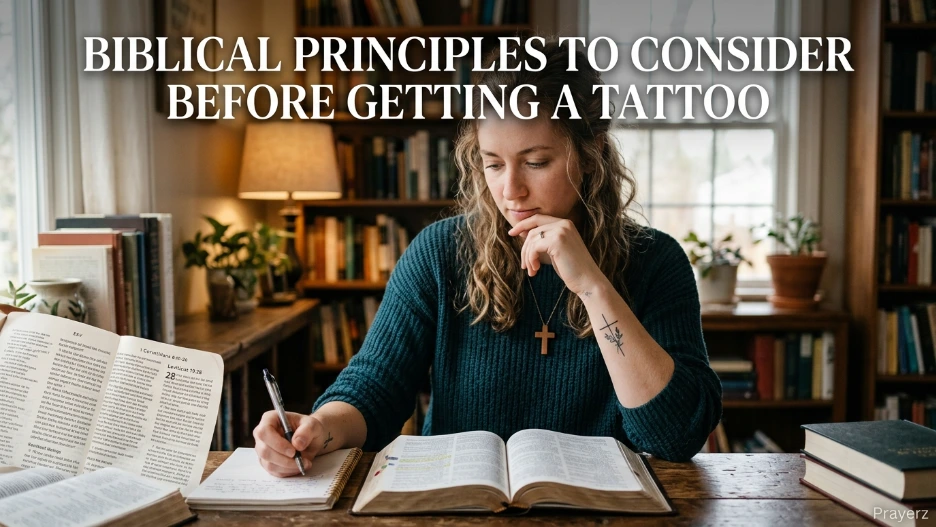
Rather than asking only, “Is it a sin?”, prayerfully consider these questions:
1. What is my motive?
Am I honouring Christ or simply following trends?
2. Does this glorify God?
Would I feel comfortable explaining this decision to Jesus?
3. Am I acting in faith?
Or am I ignoring convictions God has already placed on my heart?
4. Could this affect my Christian witness?
Will it help people see Christ in me?
Or could it create unnecessary barriers in certain ministry settings?
5. Have I sought godly counsel?
Proverbs repeatedly praises the wisdom of seeking advice from mature believers.
6. Have I prayed patiently?
Permanent decisions deserve patient prayer.
God is never in a hurry.
Common Misunderstandings About Bible Verses on Tattoos
“Leviticus 19:28 settles the issue completely.”
Not necessarily.
Christians interpret Old Testament laws in light of Christ and the New Covenant. While the principle of holiness remains timeless, believers differ on how this specific command applies today.
“If someone has tattoos, they cannot be a faithful Christian.”
This is not supported by Scripture.
Salvation is by grace through faith in Jesus Christ, not by outward appearance.
Many faithful pastors, missionaries, worship leaders, and devoted believers have tattoos.
“Getting a Bible verse tattoo automatically honours God.”
Not always.
Even a Scripture tattoo should be examined through the lens of motive, humility, and the desire to glorify Christ rather than attract attention.
“God loves people without tattoos more.”
The Bible never teaches this.
God’s love is demonstrated through Jesus Christ, who died for sinners regardless of their outward appearance.
Additional Bible Verses That Offer Wisdom
Although the Bible does not contain many verses specifically about tattoos, it provides timeless principles that help believers make wise, God-honouring decisions in every area of life.
Proverbs 3:5–6
“Trust in the LORD with all thine heart; and lean not unto thine own understanding. In all thy ways acknowledge him, and he shall direct thy paths.”
Meaning and Context
These beloved verses remind God’s people to rely on His wisdom instead of their own. Our feelings and cultural influences can change, but God’s wisdom remains constant.
Practical Application
If you are uncertain about getting a tattoo, don’t let pressure from friends, social media, or popular trends make the decision for you. Bring your desires before God and trust Him to guide you.
Why It Still Matters
God delights in directing those who sincerely seek His will. His guidance is always better than impulsive decisions.
Philippians 4:8
“Finally, brethren, whatsoever things are true… honest… just… pure… lovely… of good report… think on these things.”
Meaning and Context
Paul encourages believers to fill their minds with things that honour God. Our thoughts shape our actions.
Practical Application
If you’re considering a tattoo, think carefully about what it represents. Does its message reflect truth, purity, hope, and the character of Christ?
Reflection
A permanent decision deserves careful reflection rooted in biblical values rather than passing emotions.
Proverbs 19:20
“Hear counsel, and receive instruction, that thou mayest be wise in thy latter end.”
Meaning and Context
Wise people seek advice before making important decisions.
Practical Application
Talk with mature Christians, trusted pastors, or spiritually mature family members before making a permanent choice.
Why This Verse Remains Relevant
Humility often protects us from unnecessary regret.
Psalm 90:12
“So teach us to number our days, that we may apply our hearts unto wisdom.”
Meaning and Context
Life is short, making wisdom essential.
Practical Application
Rather than asking whether something is merely acceptable, ask whether it contributes to a life that honours Christ.
Reflection
God desires believers who pursue wisdom in both major and minor decisions.
Practical Ways to Apply These Bible Verses
Understanding Scripture is only the beginning. God calls us to live out His truth with humility, faith, and obedience. Whether you already have tattoos, are considering one, or simply want to honour God more fully, these practical steps can help.
1. Pray Before Making Permanent Decisions
A tattoo lasts much longer than a passing emotion.
Before making any permanent change to your body, spend intentional time in prayer. Ask God to reveal your motives, give you wisdom, and help you make a decision that honours Him.
Remember James 1:5:
“If any of you lack wisdom, let him ask of God…”
God is never annoyed by sincere questions.
2. Examine Your Motives Honestly
Ask yourself questions like:
- Why do I want this tattoo?
- Am I seeking attention?
- Am I trying to fit in?
- Does this reflect gratitude to God?
- Will this still honour Christ years from now?
God cares deeply about the condition of our hearts.
3. Build Your Identity on Christ
Your greatest identity is not your appearance.
It is not your achievements.
Is not your past.
It is not your tattoos—or the absence of them.
Your identity is found in Jesus Christ.
When believers understand this truth, many decisions become much clearer.
4. Show Grace to Others
Some Christians believe tattoos are unwise.
Others believe they are a matter of personal conviction.
Where faithful believers disagree on non-essential matters, Scripture calls us to humility, patience, and love.
Avoid judging someone’s spiritual maturity based solely on appearance.
Likewise, avoid looking down on those whose convictions differ from your own.
Unity in Christ is more important than winning arguments.
5. Remember That God’s Grace Is Greater Than Your Past
Perhaps you have tattoos that remind you of painful memories.
Maybe they represent a life you no longer live.
Perhaps you regret decisions made before knowing Christ.
Take heart.
The gospel is a message of redemption.
When God forgives, He does not hold your past against you.
Your testimony can become a powerful reminder of His transforming grace.
As Paul wrote:
“Therefore if any man be in Christ, he is a new creature…”
What If I Already Have Tattoos?
This is one of the most searched questions on the internet, and it deserves a compassionate answer.
If you became a Christian after receiving tattoos, nothing in Scripture suggests that those tattoos separate you from God’s love.
You do not need to live under constant guilt or fear.
Instead:
- Walk faithfully with Christ today.
- Let your character reflect His love.
- Use your testimony to point others to Jesus.
- Continue growing in holiness and obedience.
Many believers have found that conversations about their tattoos became opportunities to share how Christ changed their lives.
God often redeems what once seemed broken.
What If I Regret My Tattoos?
Regret can be painful.
Perhaps your tattoo reminds you of sinful choices, broken relationships, addiction, rebellion, or difficult seasons.
Remember these truths:
- God’s forgiveness is complete.
- Your identity is found in Christ.
- Your past does not define your future.
- God’s grace is greater than your mistakes.
Romans 8:1 offers wonderful hope:
“There is therefore now no condemnation to them which are in Christ Jesus…”
If tattoo removal is something you wish to pursue, that is a personal decision. But remember that your standing before God depends on the finished work of Christ—not on your appearance.
A Balanced Biblical Perspective
When all the relevant Scriptures are considered together, a balanced conclusion emerges.
The Bible does not encourage believers to pursue tattoos as a spiritual practice.
Neither does the New Testament issue a universal prohibition against all tattoos.
Instead, Scripture consistently calls believers to:
- Love God wholeheartedly.
- Honour Him with their bodies.
- Seek wisdom.
- Examine their motives.
- Avoid idolatry.
- Exercise Christian freedom responsibly.
- Build others up.
- Live in a way that reflects Jesus Christ.
These principles are far more important than winning debates over outward appearance.
Ultimately, the question is not simply:
“Can I get a tattoo?”
The better question is:
“Will this choice help me glorify God and reflect Christ to the world?”
That question leads us toward biblical wisdom.
Prayer About Tattoos and Honouring God
Heavenly Father,
Thank You for loving me with an everlasting love. Thank You that my worth is not found in my appearance but in the finished work of Jesus Christ.
Please give me wisdom as I seek to honour You in every part of my life. Help me to make decisions that glorify Your name and reflect my love for You. Search my heart and reveal any selfish motives, pride, fear, or desire for approval that may influence my choices.
If I already have tattoos, help me to live without shame, knowing that Your grace is greater than my past. Continue transforming my heart so that my life reflects the beauty of Christ more than anything visible on the outside.
Teach me to show grace toward believers who hold different convictions while remaining faithful to Your truth. Help me to love others as Jesus loves me and to be a faithful witness wherever I go.
Thank You for making me a new creation through Christ. May every part of my life—my thoughts, words, actions, and decisions—bring glory to You.
In Jesus’ name,
Amen.
FAQs
1. Does the Bible say tattoos are a sin?
The Bible directly mentions tattoo marks only in Leviticus 19:28, where God instructed ancient Israel not to adopt pagan mourning and idolatrous practices. The New Testament does not specifically forbid tattoos. Instead, it emphasises honouring God, examining our motives, and living for His glory.
2. Can Christians get tattoos?
Faithful Christians hold different convictions on this issue. Many conclude that tattoos are a matter of Christian liberty when they do not promote sin or idolatry, while others choose to avoid them out of personal conviction. Every believer should prayerfully seek God’s wisdom.
3. What is the meaning of Leviticus 19:28?
The verse prohibited Israel from participating in pagan customs involving ritual cutting and tattooing connected to mourning the dead and idol worship. Understanding its historical and covenant context is essential when considering how it applies today.
4. Does having tattoos affect salvation?
No.
Salvation comes through faith in Jesus Christ alone (Ephesians 2:8–9), not through appearance or personal history. Tattoos neither earn nor prevent salvation.
5. Should Christians remove tattoos after becoming believers?
Scripture does not command believers to remove tattoos after conversion. This decision is personal and may depend on individual conviction, circumstances, or whether a tattoo continues to glorify sinful beliefs.
6. Can pastors, missionaries, or church leaders have tattoos?
The Bible does not establish tattoos as a qualification or disqualification for ministry. Church leadership qualifications focus on godly character, sound doctrine, spiritual maturity, and faithful living.
7. What if I regret getting a tattoo?
Bring your regrets to God.
His forgiveness is complete, and His grace is sufficient. Your past does not limit what God can do through your life today.
8. Is getting a Bible verse tattoo always a good idea?
Not necessarily.
While a Bible verse can reflect faith, believers should still examine their motives carefully and ask whether the decision genuinely honours Christ.
9. What questions should I ask before getting a tattoo?
Consider asking:
- Does this glorify God?
- Why do I want it?
- Am I acting in faith?
- Have I prayed about it?
- Have I sought wise counsel?
- Could this affect my Christian witness?
These questions encourage thoughtful, biblically informed decisions.
10. What is the most important biblical principle regarding tattoos?
The most important principle is found in 1 Corinthians 10:31:
“Whether therefore ye eat, or drink, or whatsoever ye do, do all to the glory of God.”
Every decision—including whether or not to get a tattoo—should ultimately point people to Jesus and honour Him.
Final Encouragement
The discussion about tattoos often becomes emotional, but the heart of the gospel is not about ink—it is about redemption.
Whether you have no tattoos, many tattoos, or are still deciding, remember that God sees far deeper than outward appearance. He looks at the heart. Through Jesus Christ, He offers forgiveness, new life, wisdom, and the power to walk in holiness.
As you reflect on these Bible verses about tattoos, don’t settle for asking only, “Is it allowed?” Instead, ask, “How can my life best glorify God?” That question will guide not only your decisions about tattoos but every aspect of your walk with Christ.
May you continue to grow in faith, seek God’s wisdom through His Word, and rest in the assurance that your identity is not written on your skin but secured in the love of your Saviour. Whatever your past or present, God is still at work, shaping you into the image of His Son. Walk confidently in His grace, pursue His holiness, and let your life be the clearest testimony of His transforming power.
