
Introduction
Have you ever wondered what angels really look like?
Many people imagine angels as gentle beings with white robes and feathered wings. Paintings, movies, and popular culture have shaped our expectations. Yet when we open the Bible, especially the book of Ezekiel, we encounter something far more awe-inspiring, mysterious, and powerful.The prophet Ezekiel was living during one of the darkest periods in Israel’s history. Jerusalem faced judgment, God’s people were in exile, and many wondered whether the Lord had abandoned them. In the middle of fear, uncertainty, and suffering, God gave Ezekiel extraordinary visions of heaven. Among the most remarkable parts of these visions are his descriptions of angelic beings.
Ezekiel’s vision was not given merely to satisfy curiosity about angels. It was intended to reveal God’s glory, sovereignty, holiness, and power. Through these heavenly encounters, believers learn that God remains on His throne even when life feels chaotic. His heavenly servants carry out His purposes perfectly, and His presence is never limited by earthly circumstances.
If you are facing uncertainty, spiritual questions, fear about the future, or simply a desire to understand Scripture more deeply, Ezekiel’s descriptions of angels offer both insight and encouragement. They remind us that God’s kingdom is active, His authority is supreme, and His plans are unfolding exactly as He intends.
Quick Answer
How did Prophet Ezekiel describe angels?
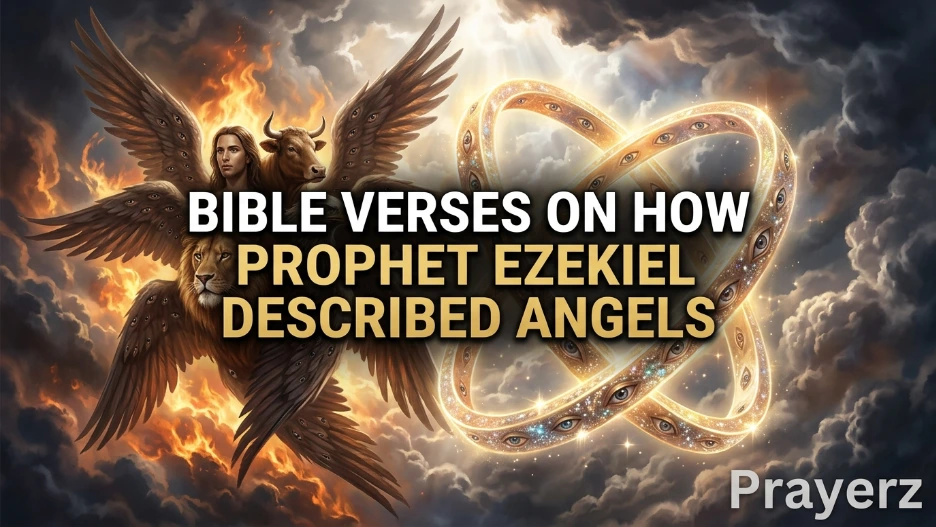
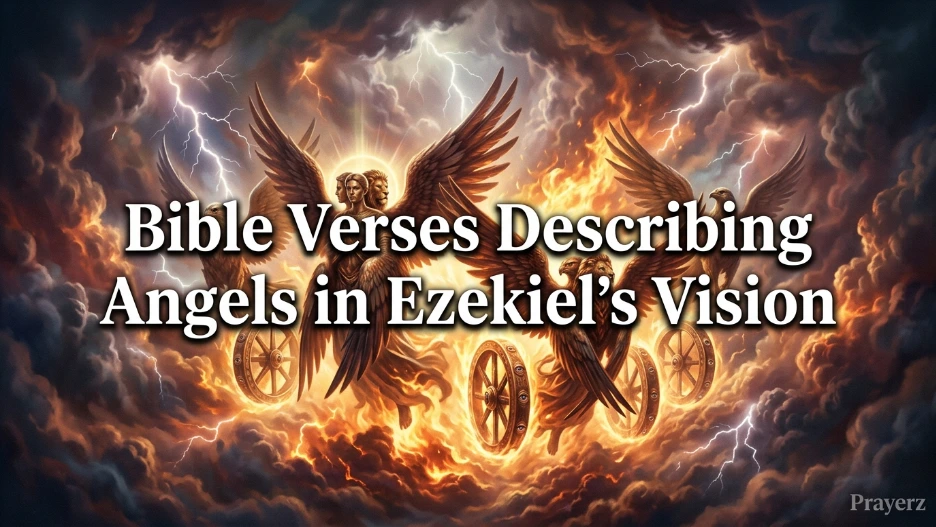
In Ezekiel chapters 1 and 10, the prophet described heavenly beings called cherubim as having four faces (a man, lion, ox, and eagle), four wings, human-like hands beneath their wings, and feet that gleamed like polished bronze. They moved with incredible speed, accompanied by mysterious wheels covered with eyes. These angelic beings were closely connected to God’s throne and reflected His glory, wisdom, power, and sovereign rule over creation (Ezekiel 1:4-28; 10:1-22).
Their appearance emphasizes God’s majesty rather than providing a complete physical description of all angels.
What Does the Bible Say About Ezekiel’s Description of Angels?
The Bible contains numerous references to angels, but Ezekiel’s vision is among the most detailed and symbolic.
When reading Ezekiel’s descriptions, it is important to remember that he was attempting to describe heavenly realities using earthly language. The prophet repeatedly uses phrases such as “the likeness of” and “the appearance of,” indicating that what he saw exceeded normal human understanding.
The angelic beings Ezekiel described are identified later as cherubim (Ezekiel 10:20). Cherubim are a special class of heavenly beings associated with God’s presence and throne. They are distinct from ordinary human beings and serve important roles in God’s heavenly court.
Ezekiel’s vision teaches several foundational truths:
- God reigns over all creation.
- Heaven is real and active.
- Angels serve God’s purposes.
- God’s glory transcends human understanding.
- God’s presence remains with His people even during hardship.
Rather than focusing solely on the appearance of angels, believers should focus on what these descriptions reveal about God’s character and kingdom.
Bible Verses Describing Angels in Ezekiel’s Vision
1. Angels Appeared as Living Creatures Filled With Life and Purpose
Ezekiel 1:5
“And from the midst thereof came the likeness of four living creatures. And this was their appearance; they had the likeness of a man.”
Meaning and Context
Ezekiel first saw four living creatures emerging from a brilliant heavenly vision. Though they possessed extraordinary features, they also resembled humans in certain ways.
The human likeness may symbolize intelligence, personality, and the ability to serve God’s purposes consciously and willingly.
Practical Application
God created humanity in His image and invites us to participate in His work. Just as these heavenly beings served God’s purposes, believers today are called to live intentionally for God’s glory.
Modern Relevance
In a culture that often promotes self-centered living, this verse reminds us that true fulfillment comes from serving God faithfully.
2. Angels Had Four Faces Representing God’s Creation
Ezekiel 1:10
“As for the likeness of their faces, they four had the face of a man, and the face of a lion… and the face of an ox… and the face of an eagle.”
Meaning and Context
Each cherub possessed four faces:
- Man
- Lion
- Ox
- Eagle
Many Bible scholars believe these faces symbolize different aspects of God’s creation.
- Man represents intelligence and relationship.
- Lion represents strength and kingship.
- Ox represents service and endurance.
- Eagle represents swiftness and heavenly perspective.
Together they reflect God’s authority over all creation.
Practical Application
Believers can honor God through every aspect of life—our minds, strength, work, and spiritual vision.
Modern Relevance
This verse reminds Christians that God rules every sphere of existence, including areas that seem beyond our control.
3. Angels Had Four Wings
Ezekiel 1:6
“And every one had four faces, and every one had four wings.”
Meaning and Context
The wings symbolized readiness, mobility, and service. These heavenly beings were constantly prepared to carry out God’s commands.
Later verses explain that two wings stretched upward while two covered their bodies (Ezekiel 1:11).
Practical Application
God calls believers to live with willing hearts and obedient spirits.
Modern Relevance
Many people struggle with spiritual complacency. The example of these angelic beings challenges Christians to remain ready for God’s leading.
4. Angels Moved in Perfect Unity and Obedience
Ezekiel 1:12
“And they went every one straight forward: whither the spirit was to go, they went.”
Meaning and Context
The cherubim never wandered or hesitated. They moved exactly where God’s Spirit directed them.
Their actions reveal complete obedience and harmony with God’s will.
Practical Application
Christians often wrestle with uncertainty and conflicting priorities. This verse encourages wholehearted obedience to God’s guidance.
Modern Relevance
Following God faithfully requires trust even when we cannot see the entire path ahead.
5. Angels Appeared Like Burning Fire
Ezekiel 1:13
“Their appearance was like burning coals of fire, and like the appearance of lamps.”
Meaning and Context
Fire throughout Scripture often symbolizes God’s holiness, purity, judgment, and glory.
The fiery appearance of these beings reflected the majesty of the God they served.
Practical Application
God desires His people to pursue holiness and spiritual purity.
Modern Relevance
In a world filled with compromise, believers are called to reflect God’s light and truth.
6. Angels Moved With Extraordinary Speed
Ezekiel 1:14
“And the living creatures ran and returned as the appearance of a flash of lightning.”
Meaning and Context
The cherubim moved with lightning-like speed, demonstrating their power and readiness to accomplish God’s purposes.
Nothing delayed their service.
Practical Application
While believers must exercise patience, we should also respond promptly when God calls us to action.
Modern Relevance
Opportunities to serve God often require immediate obedience rather than endless hesitation.
7. The Wheels Full of Eyes Revealed God’s All-Seeing Knowledge
Ezekiel 1:18
“Their rings were full of eyes round about them four.”
Meaning and Context
One of the most mysterious parts of Ezekiel’s vision involves wheels covered with eyes.
Many scholars view these eyes as symbols of God’s perfect awareness and knowledge. Nothing escapes His attention.
Practical Application
God sees every struggle, prayer, disappointment, and act of faithfulness.
Modern Relevance
When believers feel forgotten or overlooked, this truth offers tremendous comfort.
8. Angels Supported God’s Throne
Ezekiel 1:26
“And above the firmament… was the likeness of a throne.”
Meaning and Context
The entire vision ultimately directs attention to God Himself.
The cherubim were not the center of the vision. God’s throne was.
This teaches a vital biblical principle: angels exist to glorify God, not themselves.
Practical Application
Our focus should remain on God rather than becoming obsessed with angels or supernatural experiences.
Modern Relevance
Spiritual maturity centers on worshiping the Creator rather than the created.
Ezekiel 10: The Living Creatures Are Identified as Cherubim
One of the most important passages for understanding Ezekiel’s vision appears in chapter 10.
Ezekiel 10:20
“This is the living creature that I saw under the God of Israel by the river of Chebar; and I knew that they were the cherubims.”
This verse removes any uncertainty regarding the identity of the creatures.
The living beings described in chapter 1 were cherubim—powerful angelic beings associated with God’s presence throughout Scripture.
Cherubim first appear in Genesis 3:24, where they guard the entrance to Eden. They also appear in the design of the Ark of the Covenant (Exodus 25:18-22), symbolizing God’s holy presence among His people.
Related Bible Verses About Angels and Heavenly Beings
Isaiah’s Vision of Seraphim
Isaiah 6:2
“Above it stood the seraphims: each one had six wings.”
Isaiah saw another type of heavenly being known as seraphim. Their primary role was worshiping God’s holiness.
Their continual cry was:
“Holy, holy, holy, is the LORD of hosts.”
This complements Ezekiel’s vision by emphasizing God’s holiness.
John’s Vision in Revelation
Revelation 4:7-8
John described heavenly creatures that resemble aspects of Ezekiel’s vision.
The similarities demonstrate continuity between Old Testament and New Testament revelations concerning God’s heavenly throne room.
Together these passages provide a fuller picture of heavenly worship and divine majesty.
What Do Ezekiel’s Angel Descriptions Symbolize?
God’s Sovereignty
The vision emphasizes that God rules over nations, history, and circumstances.
Even during exile, God’s throne remained secure.
God’s Omniscience
The eyes on the wheels symbolize His perfect knowledge.
Nothing is hidden from Him.
God’s Power
The lion, ox, eagle, and human features reflect God’s authority over all creation.
God’s Presence
The moving throne demonstrates that God’s presence is not confined to a single location.
He remains with His people wherever they are.
God’s Glory
The dazzling brightness throughout the vision points to God’s unmatched majesty.
Practical Lessons Christians Can Learn From Ezekiel’s Vision
1. Trust God’s Control During Uncertain Times
Ezekiel received this vision during national crisis.
Likewise, believers today can trust that God remains in control during personal trials, economic uncertainty, family struggles, and world events.
2. Focus on God’s Glory
The vision ultimately points beyond angels to God Himself.
Christians should cultivate worship-centered lives.
3. Walk in Obedience
The cherubim moved instantly according to God’s direction.
Believers are called to follow God’s leading with similar faithfulness.
4. Remember That God Sees Everything
Nothing escapes God’s notice.
He sees your prayers, tears, sacrifices, and acts of obedience.
5. Live With Eternal Perspective
Ezekiel’s vision reminds us that spiritual realities exist beyond what we can physically see.
Faith grows when we remember heaven’s reality.
How to Apply Ezekiel’s Teachings About Angels in Daily Life
Pray With Confidence
Knowing God reigns over heaven and earth helps believers approach Him with greater trust.
Study Scripture Deeply
Rather than relying on cultural ideas about angels, learn what the Bible actually teaches.
Worship God Above Everything Else
Angels direct attention to God, not themselves.
Our lives should do the same.
Trust God’s Presence
Even in seasons of loneliness, God remains near.
Serve Faithfully
Like the cherubim, believers should seek to obey God promptly and wholeheartedly.
A Prayer Inspired by Ezekiel’s Vision
Heavenly Father,
Thank You for revealing Your glory through the visions You gave to Ezekiel. When life feels uncertain and overwhelming, remind us that You still sit upon Your throne. Help us trust Your wisdom when we cannot understand our circumstances.
Lord, teach us to obey You faithfully just as the heavenly beings carry out Your commands. Open our eyes to Your presence, strengthen our faith, and fill our hearts with reverence for Your holiness.
When fear tries to overwhelm us, remind us that You see everything and remain fully in control. Draw us closer to You each day and help us live in a way that honors Your name.
May our lives reflect Your glory and point others toward Jesus Christ.
In Jesus’ name,
Amen.
FAQs
1. What kind of angels did Ezekiel see?
Ezekiel saw cherubim, a special class of heavenly beings closely associated with God’s throne and presence.
2. How many faces did Ezekiel’s angels have?
Each cherub had four faces: a man, a lion, an ox, and an eagle.
3. Why did Ezekiel describe angels with multiple faces?
The faces likely symbolize different aspects of creation, strength, service, wisdom, and divine authority.
4. Were Ezekiel’s angels literal or symbolic?
Most scholars believe the vision contains both literal heavenly realities and symbolic imagery designed to communicate spiritual truths.
5. What do the wheels full of eyes mean?
They generally symbolize God’s complete knowledge, awareness, and sovereign oversight.
6. Are cherubim and ordinary angels the same?
Cherubim belong to a distinct category of heavenly beings with specialized roles connected to God’s presence and throne.
7. Why were the angels surrounded by fire?
Fire often symbolizes God’s holiness, purity, glory, and judgment throughout Scripture.
8. Does Revelation describe similar creatures?
Yes. Revelation 4 contains descriptions that share similarities with Ezekiel’s heavenly vision.
9. What is the main lesson from Ezekiel’s angel vision?
The primary lesson is not the appearance of angels but the greatness, holiness, and sovereignty of God.
10. How should Christians respond to these visions today?
Christians should worship God, trust His control, study Scripture faithfully, and live obediently according to His Word.
Final Encouragement
When Ezekiel looked into heaven, he witnessed sights beyond human imagination. He saw powerful cherubim, blazing fire, wheels filled with eyes, and a glorious throne. Yet the greatest truth of the vision was not the angels themselves—it was the God who ruled above them.That same God reigns today.
He reigns over your unanswered questions, your family concerns, your financial pressures, your health struggles, and your uncertain future. Nothing catches Him by surprise. Nothing is beyond His authority. Nothing can separate His children from His love.Ezekiel’s vision reminds us that heaven is not in chaos. God’s throne is secure. His purposes are advancing. His presence remains with His people.
Whenever fear, doubt, or uncertainty arises, remember the message hidden within Ezekiel’s remarkable description of angels: the Lord of heaven and earth is still on the throne, still worthy of worship, and still working all things according to His perfect plan.Trust Him today. Look beyond your circumstances. Lift your eyes toward the God whose glory filled Ezekiel’s vision, and rest in the confidence that He remains faithful forever.
